Friday, 23 April 2010

Zimbabwe Kariba Photographic Safari


I have been away in Zimbabwe for a while:

I am very lucky in that every year I go home to Zimbabwe, I usually spend most of the time in the Zambezi valley and mostly on Lake Kariba, where apart from the excellent fishing, I can spend loads of time on my hobby: wildlife photography.

Kariba for me has it all:
Wonderful scenery including some of the best sunrises and sunsets you could ever hope to photograph.
Plenty of mammals and is especially good for elephant photography.
Birds - This is where Kariba really excels, there is a huge variety of mostly water birds, but if you go a little walk, many land species as well.

If you want to see a few of the photos I took on the trip, take a look at my photos of my Zimbabwe trip 2010

Saturday, 16 January 2010

Night Vision Devices on Safari

When you go on safari, you may notice that most, if not all of your game drives and walks take place either very early in the morning or late afternoon.

This is not because the lodge you are staying at wants to get you out of bed, but it is because this is when you have the best chance of spotting the most game. Most animals conserve energy and rest during the heat of the day.

One part of the bush that you miss out on is what goes on at night. Most predators especially the cats hunt at night (that is why they have such good eyes).

There are some lodges that offer night drive's, but to be honest, unless they are very careful this can be very unethical. By shining a light on any animal, you will change their natural behaviour and so you are not seeing how they act naturally. then there is the danger of pointing out either prey or predators to animals that may not have noticed them otherwise. The third danger and in many ways is the worst, is by shining a very bright light into an animals eyes, they become blinded for a short time. Normally fine, but what happens if that happened to you when you had a lion stalking you? Not very fair is it? People also often shine lights into Owl's eyes - this is terrible as many will then fly off, partially blinded and ultimately end up hurting themselves and if they break a wing that injury is fatal.

So what is the answer?: Night vision

The cost of night vision devices that include night vision binoculars, scopes and goggles has dramatically come down in the last decade, as has their effectiveness. Night vision means that you can observe wildlife without disturbing their natural behaviour or running the risk of blinding them.

For more information on Night Vision:

Friday, 1 January 2010

Vehicle Rental & Car Hire Namibia

4x4 car hire in namibia

Namibia makes an excellent choice for a self drive safari and holiday location in Africa. With excellent National Parks like the Etosha National Park to visit and generally a good road infrastructure to get to them. Hiring a car in Namibia and going on a self drive adventure is relativity easy and can work out much cheaper than staying in hotels and safari lodges as well as giving you far more freedom and flexibility.

The Roads in Namibia
Generally Namibian roads are pretty good, however many are dirt tracks, which are mostly drivable in normal sedan cars, unless it rains. If you plan on visiting Namibia in the rainy season, you are highly advised to rent a 4x4.

Specialist Vehicles
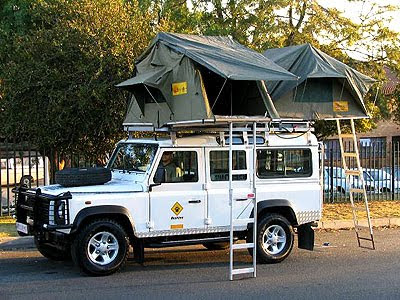
There are also many specialist vehicle rental companies in Namibia that not only offer 4x4's, but ones that are fully equipped for camping. Now I know that a camping holiday in the middle of the African bush is not for everyone, but for those that are, Namibia was everything you could ever hope for with many truly wild places to go camping.

If camping is not your idea of a holiday, you can still enjoy an excellent self drive holiday as Namibia has many excellent quality B&B's, guest houses as well as safari lodges that you can organise to get to under your own steam, saving you money.

More Information
For more information, including Namibian Car hire companies:

Friday, 11 December 2009

Katmai Leupold Wind River Binoculars

Safari Binocular Review:
Katmai Wind River Binoculars from Leupold
10x32 Katmai Leupold Wind River Binoculars
The whole range of Wind River also known as Green Band  binoculars from Leupold have been optimized for the outdoors and for general nature viewing. Not all are ideal to take on safari however. I think that the most important difference between a good wildlife observation binocular and a good safari binoculars is Size.

Bigger is not always better
The last thing you want to carry in your luggage is a bulky pair of binoculars, yet you still want a pair of binoculars that perform as well as a full size version. The answer could be compact Leupold Katmai Binoculars. They have 32mm objective lenses compared to 42mm in full size versions, yet deliver the same light transmission and exit pupil as full size versions.

The smaller objective lenses mean that the binocular is far more compact and lighter than the usual 42mm versions. They come in 3 different magnifications 6x, 8x and 10x.

On top of this Katmai binoculars have:
  • Fully Fog and Waterproof
  • Fully Multi Coated Lenses
  • Quality Phase and L-Coated Prisms
More Details
For more details and where you can buy them, read this article on Leupold Wind River Binoculars

Safari Holiday Shop

Kilimanjaro Safari Holiday
Website Review
New and improved
, is the  Safari Holiday Shop from the Safari Holiday Guide.

From here you can explore a number of safari holiday packages right across Africa. Browse by country using the safari holiday map, or choose a holiday by interest. These include things like:
  • Scuba Diving & Safari's in Africa
  • Kilimanjaro Hiking Holidays
  • Gorilla Safaris in Rwanda & Uganda
  • Beach & Safari Holidays
  • Birdwatching Safaris
  • Photographic Safari Holidays
Cheap Safaris?
There is even a cheap safari holiday section, where all the holidays listed are under $800 (£500) and if you can't find exactly what you are looking for there is a "design your own holiday" feature.

Conclusion
A great place to go to check and compare a number of different holiday options all in the same place, saving you time.

Tuesday, 4 August 2009

Nikon Monarch ATB 8x42 Waterproof Binocular

Nikon Monarch ATB 8x42 Waterproof BinocularThe most important piece of equipment that you can bring with you on safari is not your camera, but a good pair of binoculars. Remember you are not visiting a zoo and much of what you may be looking at will not be sitting right next to you and so to get the most out of your visit and to get closer to all the action you will need binoculars.

Lets take a look at the popular Nikon Monarch ATB 8x42 waterproof binocular as I recently noticed that they have been offered on discount from many binocular retailers and see if it has what it takes.

Full Review of the Nikon Monarch ATB 8x42 Waterproof Binocular

Best Binoculars for Safaris
With so many choices and different types of optics, it can seem a little daunting when deciding which are the best binoculars for you, your personal needs and for your safari holiday.

Ideally we are looking for a great nature viewing binocular (this includes birdwatching) that must also be tough and small enough to easily pack away and carry with the rest of your luggage.


Bigger is not always better
This includes the magnification, these Nikon binoculars have a magnification of 8x and that happens to also be the most popular magnification for birdwatching binoculars. This is because the larger the magnification the less stable the image is that you will be looking at through them is and generally the field of view is smaller the larger your magnification. An important factor when trying to quickly locate fast moving erratic objects (like birds) through your optics.

Whilst birding will be a part of what you will be doing on safari, you are mainly on the look out for the bigger, slower moving stuff, and so personally I do prefer a slightly stronger magnification, but definitely no more than 10x

Size of Binoculars
These Nikon Monarch Binoculars have and objective lens diameter of 42mm (8x42), again this is the most popular size for birding binoculars, larger objective lenses mean as a general rule, the binoculars take in more light, giving you a bright image. Unfortunately larger objective lenses mean larger binoculars which can be more difficult to carry with you, especially on holiday and that is why I tend, for safaris to choose a more compact design with good quality optics that have a high light transfer rate, that are simpler to fit in with the rest of my luggage.

Conclusion - Great Birdwatching Binoculars
So whilst these are excellent binoculars overall and make ideal birding binoculars, for safaris, I would only give them a score of around 7/10 - good but not the best.

More information:

Monday, 11 May 2009

Tsavo Safari Holiday in Kenya


Tsavo 1988 - 2006
Originally uploaded by Nikographer [Jon]

When most people think of a safari holiday in Kenya, the first name that comes to mind is the Masai Mara National park and it's great wildebeest migration. There is of course much more to Kenya thn just the Mara:

Tsavo National Park, which consists of Tsavo East and Tsavo West national parks as well as the Chyulu Hills, is about 200km from Nairobi and less than that from Mombasa on the Main Nairobi to Mombasa road, making it the closest large national park to the holiday resorts at the coast and so is an ideal location to take a break from the beach to go and see some of Kenya's fantastic wildlife.

The combined Tsavo National Parks cover an area that is greater than Wales, making it Kenya's largest wildlife reserve and one of the largest in Africa. Here you can find all of Africa's Big 5 animals (Elephant, Black Rhino, Buffalo, Lion and Leopard) as well as a huge variety of other animals.

Because Tsavo is a National park and less popular than the Masai Mara, they make the perfect destination for a self drive safari and whilst the road network within the reserve is excellent, it is still advisable to hire a 4x4.

For more information on the reserve, take a look at the Safari Holiday Guide to Tsavo National Park.

Tuesday, 5 May 2009

Self Drive Safari Tips

Below is a video of a couple on a self drive safari in Hluhluwe-Imfolozi National Park in South Africa.

In the video they pass on some excellent advice, including not to drive to fast whilst on safari as well as not to go out game viewing during the mid day sun.

Wednesday, 15 April 2009

Best Camera for Safari

African Fish Eagle

Photography is a hobby of mine and one that I really enjoy in the bush or on safari, but it is not the only reason that I am there and I am not a professional photographer.

Digital SLR Cameras for Safari Photography
The reason that I mention this is there is no doubt that digital SLR cameras are if you are looking for the best cameras for Safaris and pretty much everything else, the way to go. They do however have some downsides, especially when considering what is the best camera for travel and safaris. The biggest two are price and size:

1) Size Counts
If you are on safari, that means that you are also travelling, that means unless it is your job, you probably don't want to take up all the space in your luggage with camera equipment. Digital SLR's, with a decent size telephoto lens (which you will need) are big, take up plenty of space and are pretty heavy pieces of kit.

2) The Price is Right
Again, for me and for many people who go on a safari holiday, photography is a hobby, you want to get some great pictures, but don't want to spend more on your camera than the holiday itself! If price is no option then a good quality digital SLR, with a nice big telephoto lens is the best, but it will be expensive.

So is there an alternative to the SLR camera?
If the two drawbacks to getting an SLR camera for travel, safari and wildlife photography are something you don't want, is there another option? The answer is most certainly yes.

Digital Super-Zoom Cameras
The best Cameras for Safaris
Most of the larger camera makers make a version of a super-zoom camera, basically halfway between a compact digital camera and an SLR camera. Whilst larger than a compact camera, they are much smaller and lighter than true SLR cameras. They also come with fantastic zoom capabilities, with 15x, 18x and even 20x lenses becoming common place. That is an SLR equivalent of a 520mm telephoto lens. Digital super-zooms also only cost a fraction of SLR cameras and you have the added advantage of not having to buy a separate telephoto lens.

I have almost always used some sort of digital super zoom camera and have, what I think taken some pretty respectable photos. For a few examples, take a look at some of my African Bird and Wildlife photos, or some of my Elephant Photos.

For me, a person who wants to take great photographs, but is on a budget, there is no choice, the best camera for Safari, Wildlife and Travel photography has to be some sort of Digital Super Zoom Camera.

Which SuperZoom to Get?
Ok, so we have now decided not to get an SLR camera, but which super-zoom to get?
I have written a few articles on what I think is the the best Superzoom camera for travel & wildlife photography:
And if you want to give your superzoom camera even more power:

Telephoto Conversion Lenses for the Panasonic DMC-FZ28 & DMC-FZ18

Sunday, 18 January 2009

What to Wear on Safari


If you are planning on going on a Safari holiday, it is important to take the correct clothing.

This is not only for your comfort, but also to help you blend in with nature an thus hopefully making it easier to get closer to the wildlife that you have come to see.

More information on Safari Clothing
There is a great article on the Safari Holiday guide that goes through each item of clothing including safari jackets, hats, trousers and shirts and find out just what works and why: Safari Clothing Advice

Most of the choices are common sense, like the colours that help you to blend in, but there are also tips on things like the materials to look out for, for good temperature control whilst also not making too much noise when moving that could frighten skittish animals away.

Friday, 24 October 2008

Two Zebra's at Duma Manzi Game Reserve

A photo I took on Duma Manzi Game reserve in South Africa

Monday, 29 September 2008

Safari Holiday in South Africa

A very nostalgic video of a Safari Guide's view of working on Welgevonden game reserve in the Limpopo region of South Africa. Enjoy...

Monday, 8 September 2008

Warthog attacks Lion!

Pretty funny video of a gutsy Warthog that has it in for a Lioness:


Not sure why the lioness does not fight back and I wish it was me that saw this behaviour on a safari holiday.

Tuesday, 26 February 2008

Safari Holiday and the Blue Train

Blue Train

One of the worlds great Train Journeys is the trip from Pretoria to Cape Town on South Africa's Blue Train. A vision of luxury, a five star hotel on wheels. Now the Blue Train will offer two new trips that combine the luxury train journey with a safari at Legacy's Bakubung Bush Lodge in the Pilanesberg Game Reserve and a Golfers Breakaway in conjunction with Zimbali Lodge in KwaZulu-Natal.

There are two departure dates for each package in 2008 and each trip lasts for four days.

The Blue Train and Golf Holiday Package
You could be travelling on the Blue Train as well as enjoying a golfing holiday in South Africa, which includes two rounds of golf at Zimbali Golf Estate

Dates: 11 – 15 September 2008 and 13 - 17 November 2008. This 4 night package, departing on a Thursday evening, includes a return overnight journey on The Blue Train and 2 nights at Zimbali Lodge in KwaZulu-Natal on a B&B basis.

Prices are about £660 per person per person sharing in a Deluxe suite.

Blue Train and Safari Holiday
The Blue Train safari includes one overnight forward & one return day trip’s accommodation on The Blue Train, plus 2 nights at the Bakubung Game Lodge in the Pilanesberg Game reserve. You can also go on one guided game drive per day which is included in the price.

Dates: 24 Sept – 27 Sept 2008 and 29 Dec 2008 – 1 Jan 2009.

Prices from £525 per person sharing.

For more information, visit Bluetrain.co.za.

Monday, 31 December 2007

Northern Carmine Bee-eater, The Gambia


The Gambia is an excellent Destination for bird Safaris, Here is a photo I took on a recent Gambian Birding Safari

Monday, 13 August 2007

Thursday, 9 August 2007

Tanzania’s Top Ten Destinations

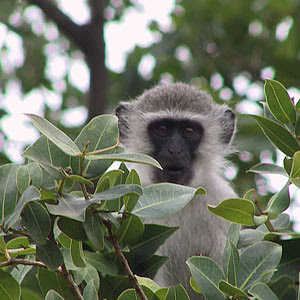
Monkey photographed on Safari in Tanzania
1.The Ngorongoro Crater is stunning and most certainly unique. The crater has an immediate and overwhelming initial impact on all ones senses. Designated as a World Heritage Site, the crater has one of the largest concentrations of wildlife in Africa. An estimated 25,000 large mammals in a relatively small area make it a ‘must’ destination when on safari on the Northern Tanzanian Safari Circuit. This natural amphitheater is as diverse as the immense Serengeti with a cross-section of wildlife and habitats all contained in the collapsed volcanic crater. Ngorongoro is home to one of the few remaining populations of black rhino in Tanzania.


2.The Serengeti National Park has so much to offer for it is vast and every season is special in this amazing National Park. However, for most safari itineraries the main focus of any trip to the Serengeti is the migration, depending on the long rains from February to May, where up to two million herbivores take advantage of the short grass of the southern Serengeti to calve and feed, before moving north westerly to eventually arrive at the dramatic crossing of the Grumeti river, home to some of Africa's biggest crocodiles. Large numbers of lion, hyena and cheetah follow these massive herds producing some of the finest game viewing on earth.

3.The Zanzibar archipelago consists of fifty or so islands the main island is called Unquia but usually referred to as Zanzibar Island. Stone Town is the capital of Zanzibar being the port and entrance to these spiced islands. As you step off the ferry onto the quay, the smell of cloves is carried on the breeze to greet you and immediately you are transported into this tropical paradise. Dhows sails, shaped like the crescent moon, sail out of the harbor and pass along the miles of palm fringed beaches – this is heaven on earth.

4.Tarangire National Park is probably Tanzania’s most underrated park. This park is used as a stop over point on the way to or from the Serengeti. It is a special area, a bird watchers paradise and in the dry season many animals are attracted to the area as it has a year round water supply along the River Tarangire. There are some wonderful camps here such as Swala Camp and then the magnificent Oliver’s Camp in the wilderness area of the Park. The park is most legendary for the large concentration of elephants and the huge baobab Trees that dominate the park.

5.Lake Manyara National Park is a small but scenic safari park. The wooded parts of this park get so humid that the only escape from the heat is to climb the trees. Although it is most unusual for lions to climb trees, this park is famed for its tree climbing lions. The park also offers canoeing on the lake and this is a fabulous way to get out of the safari vehicle burn off a few calories and see the game from an unusual perspective.

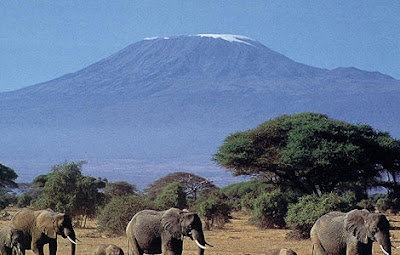
6.Mt. Kilimanjaro, sitting on the Tanzania- Kenyan border, is remote, alluring and simply put, awe inspiring. Part of the adventure of climbing this mountain is to begin on the dusty plains of equatorial Africa and experience the non technical climb to near arctic conditions at the summit, passing through tropical rain forest, moorland and alpine desert onto snow and ice. Located in Northern Tanzania, Kilimanjaro dominates the landscape. This is Africa’s highest point.

7.The Selous Game Reserve is huge and wild, roughly the same size as Belgium. This park is on the Southern Circuit and has much to offer. Although it is not as popular as the national Parks in the North of Tanzania, in recent years visitors have begun to realize this park has much to offer the tourist looking for the remote wilderness experience. The northern section of the park has a handful of luxury camps. This area is one of the few places in Africa where wild dogs are found. As the animals here are not as habituated to humans they are much more difficult to spot. However this park truly offers the Out of Africa experience.

8.Ruaha is probably the most arid of Tanzania’s parks. It is on the Southern Circuit and is sometimes know as Giraffe Park as it has in excess of 8,000 Maasai giraffe. The Kudu is also prolific in this park and when surprised this animal will stand as a statue, blending perfectly into the background. The rare and endangered African hunting dog are fairly common in Ruaha. As is the case in most areas of Tanzania, bird life here is spectacular. From December to January the park enjoys a large number of the rare Eleanor’s falcons.

9.Mafia Island is set off the coast of central Tanzania, twenty kilometers from the Rufiji River Delta, making this remote island an ideal place for relaxing after a safari in the Selous. A small island, fifty kilometers long and fifteen kilometers wide and completely surrounded by a barrier reef, entry by light aircraft is required. The reef is teaming with marine life. There are over 460 species of tropical fish in these reefs as well as five species of turtles. The diver, either beginner or more experienced, has a profusion of underwater habitats to explore.

10.Arusha National Park is a lovely park is set between the peaks of Mount Meru and Mount Kilimanjaro. It is a tiny park - only 53 square miles. The Park is an area of outstanding beauty and can be visited easily for a few hours from the nearby town of Arusha. The highlands are forested, with the peak of Mount Meru rising above the forests to dominate the park. The forests are populated by a thriving and varied bird life and climbing in the ancient cedar trees is the dramatically marked black and white colubus monkey, barking its haunting call through the quiet forest.


Kalisti Juma cares about responsible tourism; tourism should change lives for the better http://www.betheladventure.co.uk . For more information on Tanzania see http://www.tanzania-info.co.uk this site provides information for planning a safari in Tanzania.


Article Directory: Article Dashboard

Why you should go to Africa for your next beach holiday.

With seemingly almost everyone following each other to the traditional summer beach holiday destinations of Spain, Portugal, Greece and Florida. I have an few ideas why you should leave the beaten path and take your next beach holiday in Africa!

Africa probably does not spring to mind as the first destination you would choose when planning a beach holiday, but there are many great reasons to give it a try. Cape Town in South Africa has up until recently always been "the" destination to go to if you wanted to go to Africa and enjoy the beach as well as all the other great things that only this great continent has to offer. Now there are new kids on the block and places like Zanzibar off the coast of Tanzania, Mombasa in Kenya and The Gambia have really come in to their own each offering their own unique selling points and flavour of Africa but all great beach holiday destinations.

One of the more obvious reasons to pick somewhere on the African continent is to enjoy the beach during the European winter, breaking up your winter and escaping the summer holiday rush. How often these days do we hear of strikes at airports during the summer peak holiday period, delaying millions of holidaymakers and destroying their few weeks away from work? Escape the rush and travel out of the peak season.

Beach Holiday in Cape Town, South Africa

Capetown in South Africa is still the most sophisticated beach holiday destination in Africa, with the incredible backdrop of Table Mountain, excellent accommodation options and some of the best restaurants in the world it would be an excellent place to visit even without the beach. On top of that you can also enjoy the best wines and scenery of South Africa on the Garden Route, which stretches from Mossel Bay to the Storms River in the Western Cape. There are ten nature reserves in the area as well as unique marine reserves, home to soft coral reefs, dolphins, seals and a host of other marine life.

Combing golf with a beach holiday has always been popular in places like Spain and Portugal, South Africa and the Cape Region have some of the best Golf courses in the world, now you can combine a beach, golf and safari holiday, there is nowhere in Europe that can boast that!

What about the beaches? Cape Town has some excellent beaches, False Bay with the long sandy beach which extends from Gordon's Bay to Muizenberg and includes Boulders Beach and Simon's Town. The Atlantic Seaboard along the West (Atlantic) side of the Cape Peninsula with well known beaches including Sandy Bay, Clifton Camps Bay, Scarborough and Kommetjie. The West Coast, running Northwards from Cape Town with the windy conditions make these beaches popular for surfing and kite-surfing.

An important point to note is the sea in False Bay is about 6 degrees warmer than the Atlantic Seaboard and the West Coast!

On the down side, Cape Town is the furthest point in Africa you can travel to from Europe, so expect a long flight as mentioned above the water can be a little chilly and then it is probably one of the more expensive destinations in Africa.

Beach Holiday in Mombasa, Kenya

Kenya, probably best known for it's wildlife safaris on the Masai Mara but also has plenty to offer in the way of beach holidays on the coastline near Mombasa. The city of Mombasa is a "real" bustling African city and there is in stark contrast to the sophistication of Cape Town. There are however many fine places to eat to sample some more traditional African food as well as those catering to western palates. The Old town is also well worth visiting and Fort Jesus, a Portuguese fort built in 1593 by order of King Philip II of Spain, to guard the Old Port of Mombasa, Kenya. It was built in the shape of a man and was given the name of Jesus as a religious reference.

Along the coast there are plenty of places to stay with some of the most luxurious hotels you'll find anywhere in Africa, some great little beach cottages as well as basic beach side campsites, something for everyone.

The snorkeling and diving in Mombasa and the surrounding areas is also excellent and it is a great place to learn to dive with the prices here are substantially cheaper than many other well know diving locations. Bamburi beach is a great location to base your beach holiday in Kenya, about half an hour from Nairobi, there are some great hotels and beach cottages as well as an excellent PADI dive center located at the well know Travellers Beach Hotel.

Of course no trip to Kenya would be complete without some sort of Safari and they can be organised from Mombasa with a popular destination being the Tsavo National Park, less well known than the Masai mara, but at just over 21,000km sq, Tsavo is the largest national park in Kenya and one of the largest in the world with large herds of Elephant and plenty of lions, it is well worth considering if you want to take a break from relaxing on the beach!

With these two very different African beach holiday options, I hope to have given you a just a flavour of what Africa can offer you in the way of your next seaside holiday.

Saturday, 14 July 2007

Johnny Clegg & Safari on Chobe river in Bostwana

Great video of a canoe safari on the Chobe in Botswana to the sounds of African musical legend Johnny Clegg... love it!

Friday, 13 July 2007

History of the Kruger


History of the Kruger National Park

The first evidence of human occupation in and around the Kruger Park stems from the one hundred rock paintings and 300 archaeological sites left by early humans thousands of years ago.

François de Cuiper, who led a Dutch East India Company expedition to the Kruger, was the first recorded European in the region. His expedition however was thwarted by an attack by local tribesmen.

Europeans and local farmers were attracted to the region by rumours of gold, and by the trade in precious goods such as ivory and skins. The rapid obliteration of the wildlife was noted by then president Paul Kruger, and he urged the Transvaal government to establish a wildlife reserve for the protection of the species. The Sabie Game Reserve, bordered by the Crocodile River in the south, the Sabie River in the north, the Lebombo Mountains in the east and the Drakensberg Mountains in the west, was established in 1898. Scottish-born James Stevenson-Hamilton was appointed Sabie's head ranger in 1902. He proved to be a man with vision and fortitude, and eliminated poaching on the reserve. Not long after his arrival he was called Skukuza - he who sweeps clean - by the nearby Moçambique tribes. By 1905, the Park had expanded to seventeen thousand kilometres. In the 1920's it became clear that game reserves had tourist potential. Stevenson-Hamilton set out to exploit this new source of income. When he learned that the South African Railways had a nine day tour of the lowveld he immediately arranged an overnight stop at Sabie Bridge to be part of the itinerary. As public knowledge grew so did funds. The Park was opened to the general public in 1927. Over the years, the Kruger Park changed from an inaccessible expanse of wilderness with few camping areas and fewer roads to what it is today - a well-run National Park that is a national flagship for conservation.

One of the men who was in large part responsible for this remarkable transformation was James Stevenson-Hamilton, undeniable father of the Kruger National Park - "I had at least brought up Cinderella and launched her on her career. I loved her best when she was a pathetic and dust-covered little wench, derided and abused. Always I felt that, giver her chance, and her attractions recognised, unlimited possibilities lay before her. Now that she had become a Great Lady it was fitting she should be provided with custodians better suited to provide her new requirements (Upon retiring, 1946)."

In 1950 a research station was opened in Skukuza, which heralded a new era - research continues to this day, and Skukuza is still where the main research centre is housed. Nine years later an eighteen hundred kilometres fence protected the animals from the Kruger National Park from the outside world. Since traditional migrating routes of the herds were now cut off this caused many problems, which needed careful management.

On the 31st of May 1972 the Sabie and Shingwedzi reserves together with 70 privately owned farms were consolidated into the Kruger National Park, one of the great game parks of Africa. Important also was the Act of Parliament by which the park was established.

The last few years have seen the removal of fences separating the Kruger Park from the neighbouring reserves - Sabi Sand, Timbavati and Thornybush, allowing animals access to increased requisite resources and allowing tourists increased access to the game. In addition, the Kruger Park, which currently covers 2 million hectares, is to be extended into a Peace Park - the Great Limpopo Transfrontier Park. This massive reserve will incorporate the Kruger National Park, the Limpopo National Park of Mozambique and the Gonarezhou National Park of Zimbabwe into a 36000 square kilometre park larger than Switzerland.

The Kruger Park has been lauded for the professional management of its wildlife and people. It is a living monument to President Paul Kruger, James Stevenson-Hamilton and those that fought for the establishment of a large wilderness reserve, where dwindling African wildlife may still find refuge. The Kruger Park offers, without a doubt, one of the best wildlife viewing experiences in the world. For more on the Kruger visit the Kruger section of the Safari Guide